End-grain cuttingboards
Why end-grain?
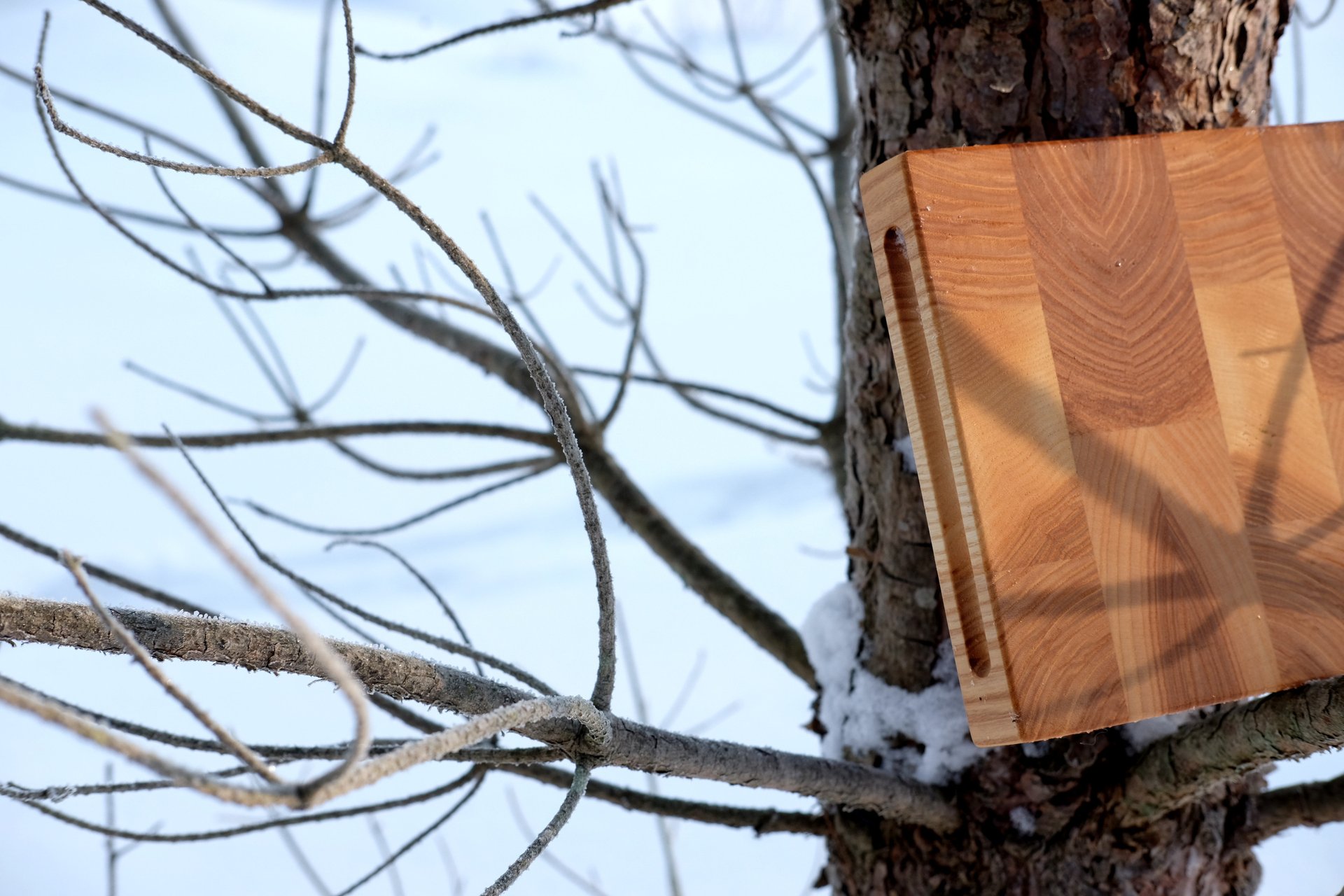
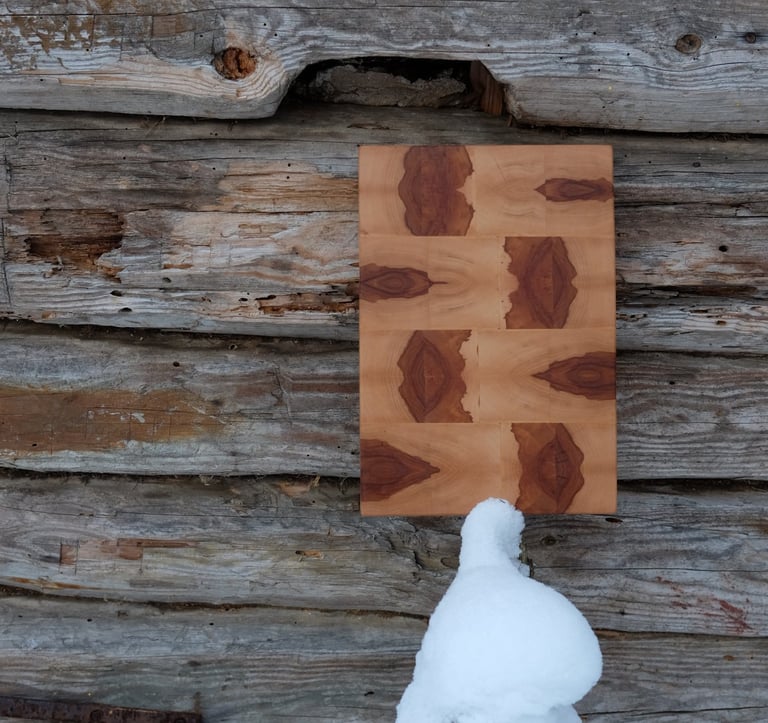
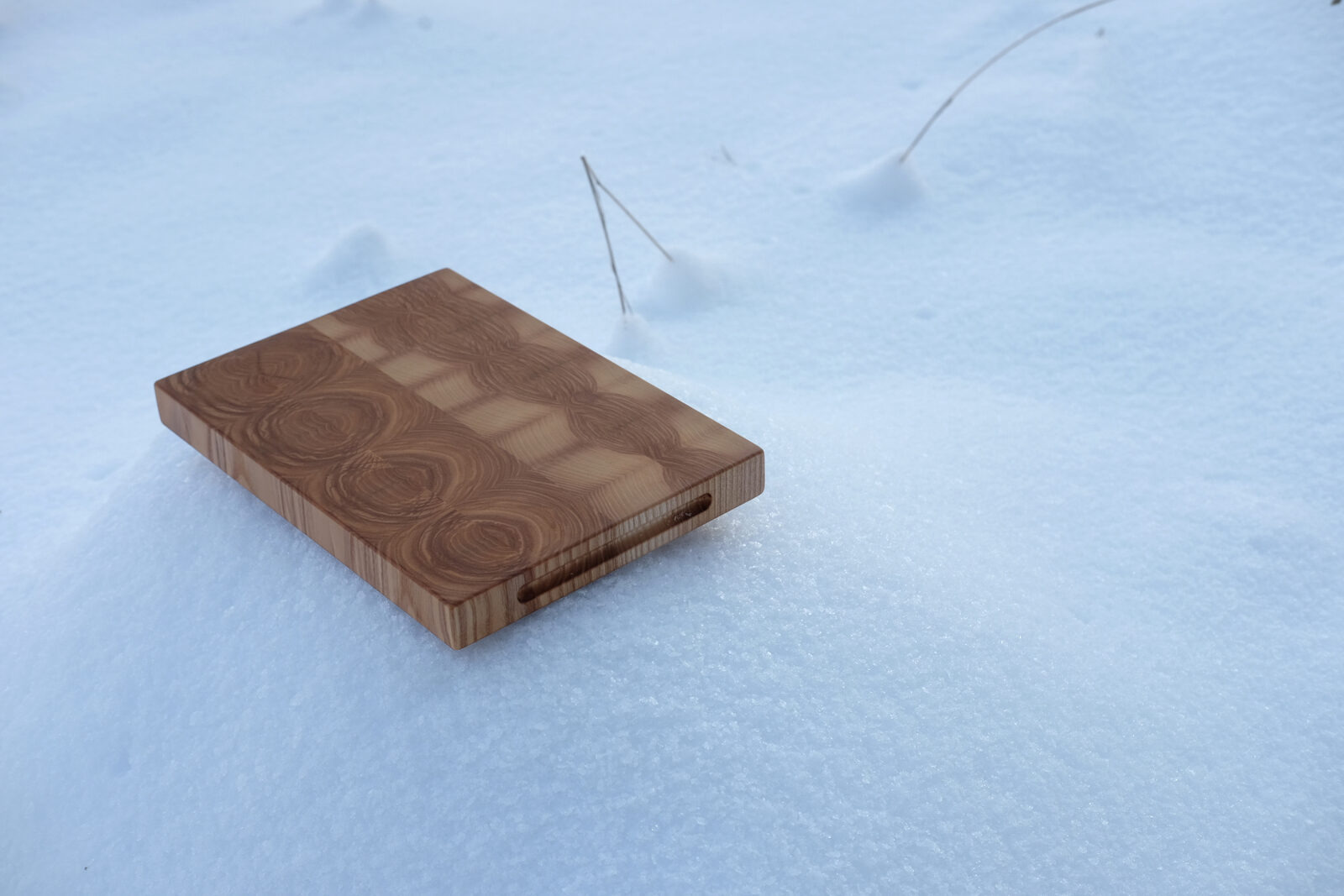
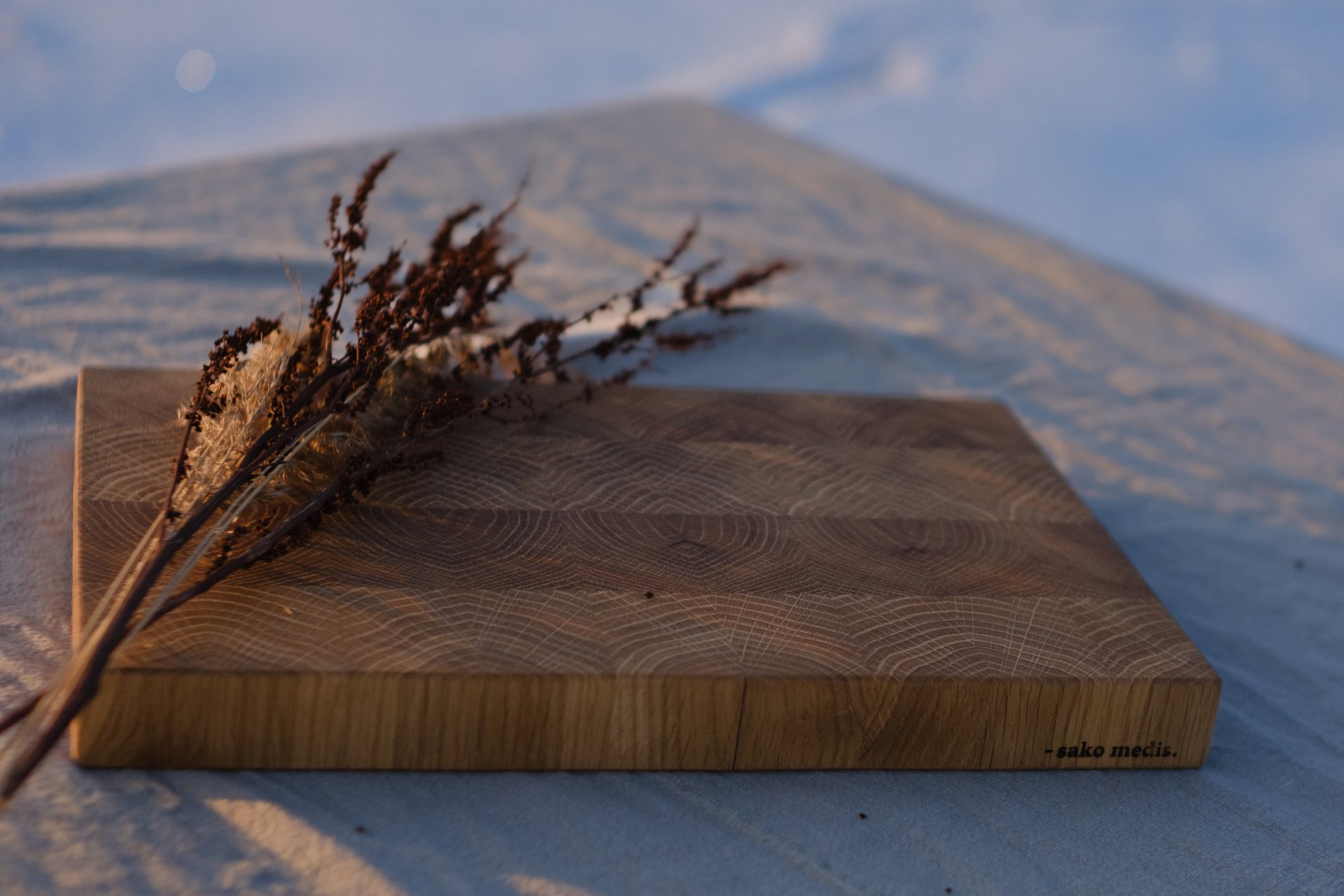
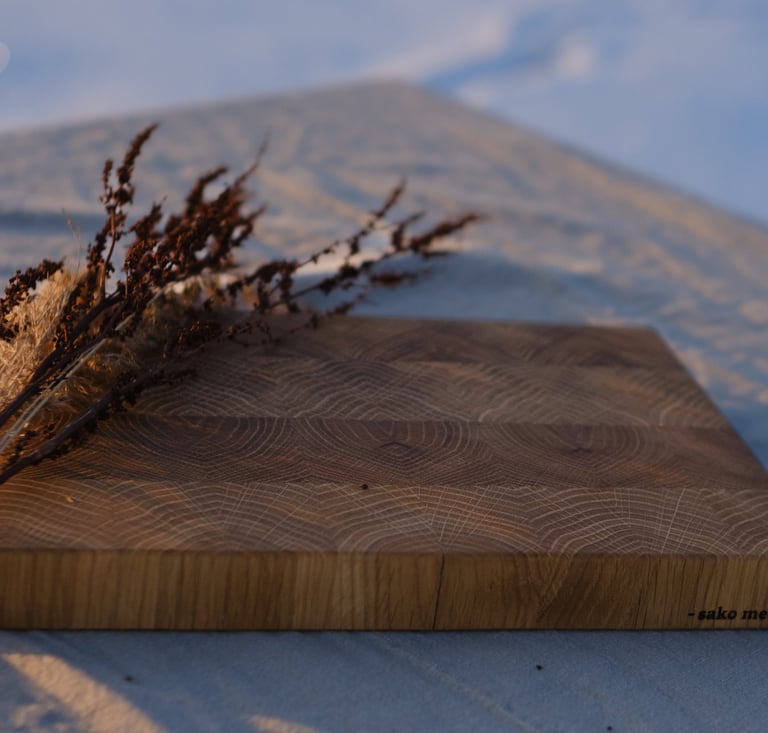
The term "end-grain" describes the grain orientation of the wood. Instead simply of glueing long boards to a bigger panel, i first cut the boards into lots of short pieces, flip them – and then glue them up. That way, now the end of the grain faces up to the surface. This reaveals beautiful annual rings, that otherwise remain mostly unseen. With the fibers standing vertically, the surface not only looks unique but also performs differently, giving end-grain cutting boards their signature combination of beauty and durability.
Unique
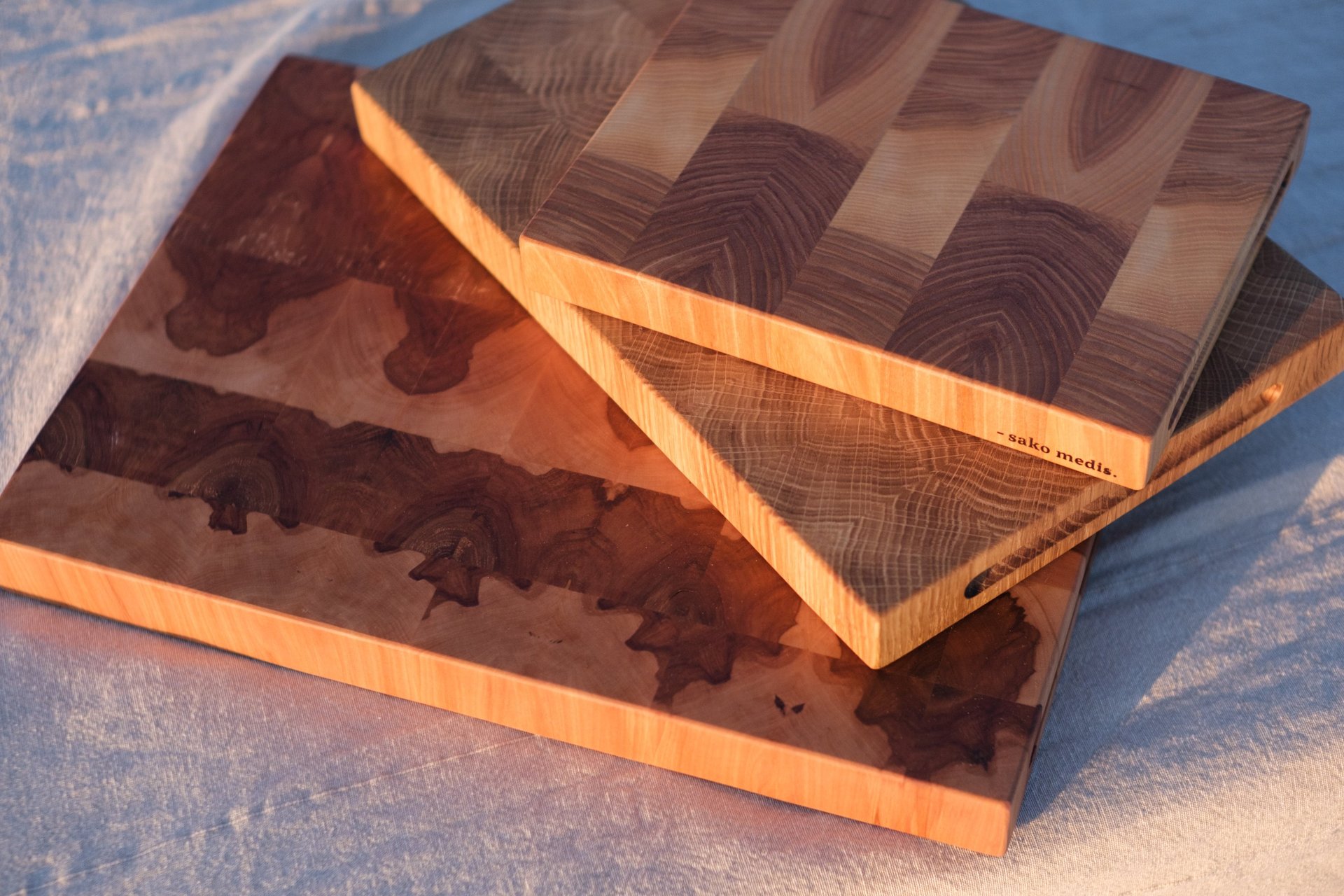
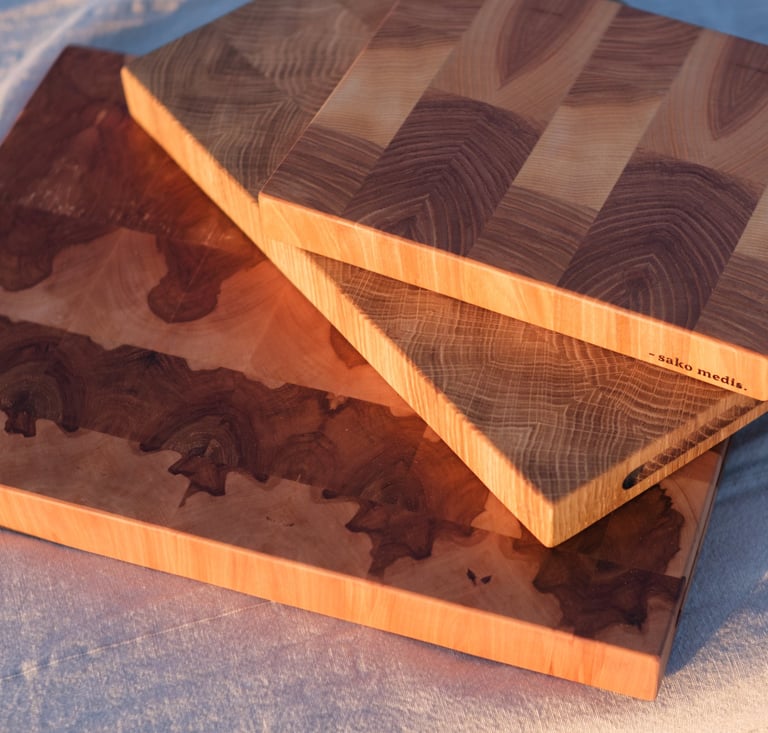
Each end-grain board is truly unique. They vary in size, type of tree, the pattern the wood reveals and the way I puzzle them together. Every board goes many times through my hands in the production, and they all have such character – I could almost give them names.
Currently, I use five different types of trees for the wood of the cuttingboards: oak, ash, maple, elm, and apple – each coming with their own appearance and character.
Durable
When cutting on end-grain, the knife goes in between fibres, causing less damage. The surface stays flat longer and sometimes it might even seem that the board is healing some of its cuts in the surface. For best protection I apply two coats of oil and then finish it with Osmo Top-Oil (food-safe), which contains hard wax.
Knife-friendly
The vertical fibers allow the knife to slide between them rather than cutting across them, which maintains the sharpness of the blade.
Thick & sturdy
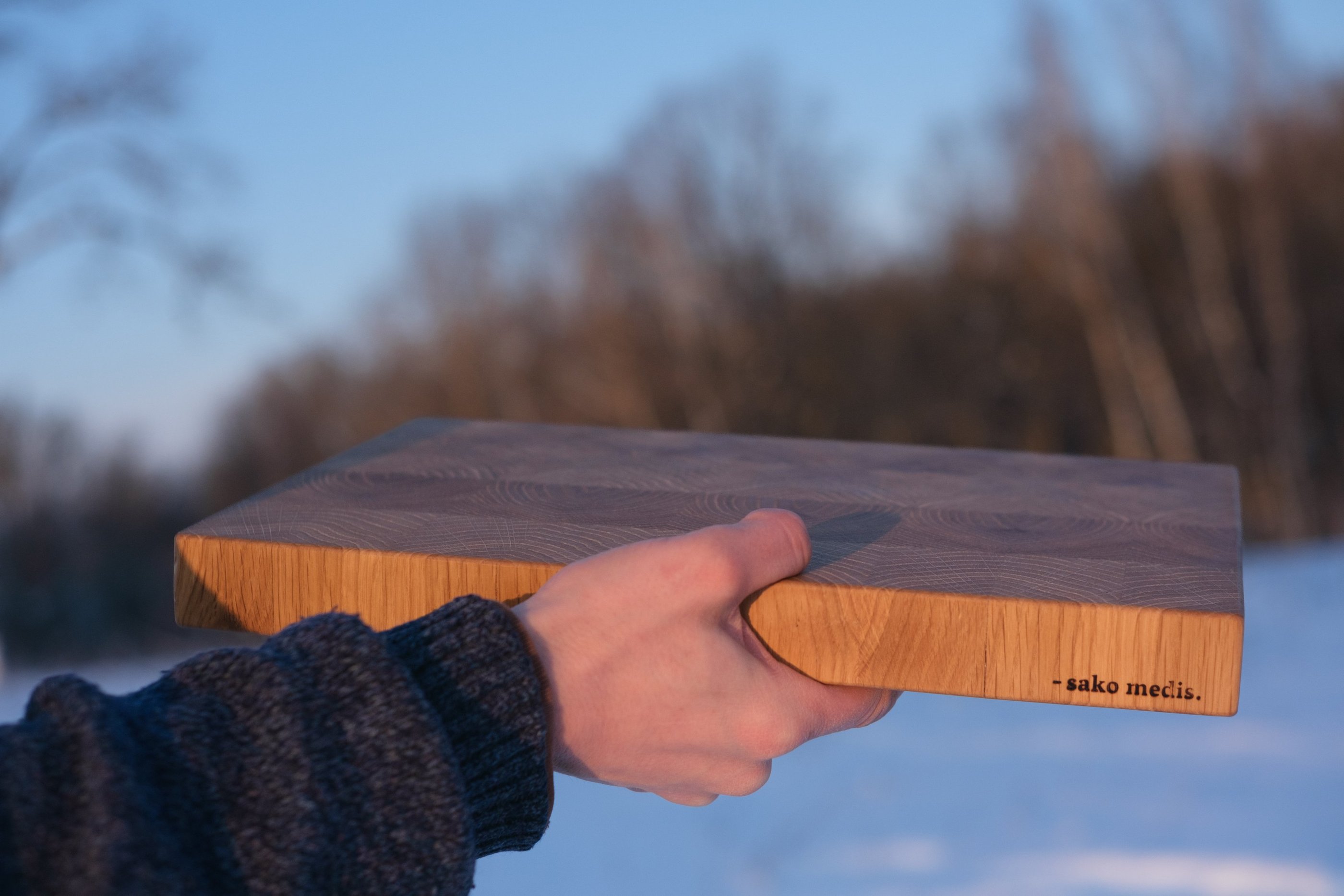
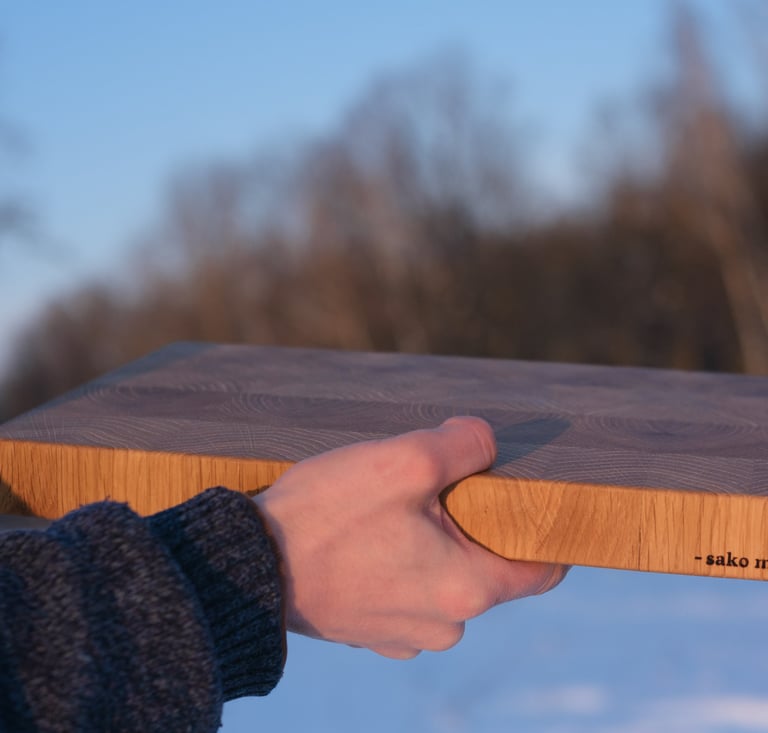
A thicker board provides stronger glue joints and is less prone to warping when exposed to moisture. It also gives the board a sturdy, high-quality feel, while the added weight helps keep it stable and prevents slipping during use. Despite its solidity, the side grooves on each cutting board ensure it can still be lifted and handled comfortably.
Healthy
In comparison to plastic, bamboo, or edge-grain wood, end-grain cutting boards stand out as a healthier option. Cutting on a wooden board means no contact with microplastics. End-grain cutting boards take less deep cuts and damage which means less place for bacterial life.
Sako medis cutting boards are glued with food-safe Titebond 3 glue and are finished only with natural tung oil and food-safe Osmo TopOil. It helps protect the wood, yet, as with any wooden cutting board, it is best not to use it for raw meat.
How to take care
Follow these simple rules to help your board age beautifully and stay in top condition:
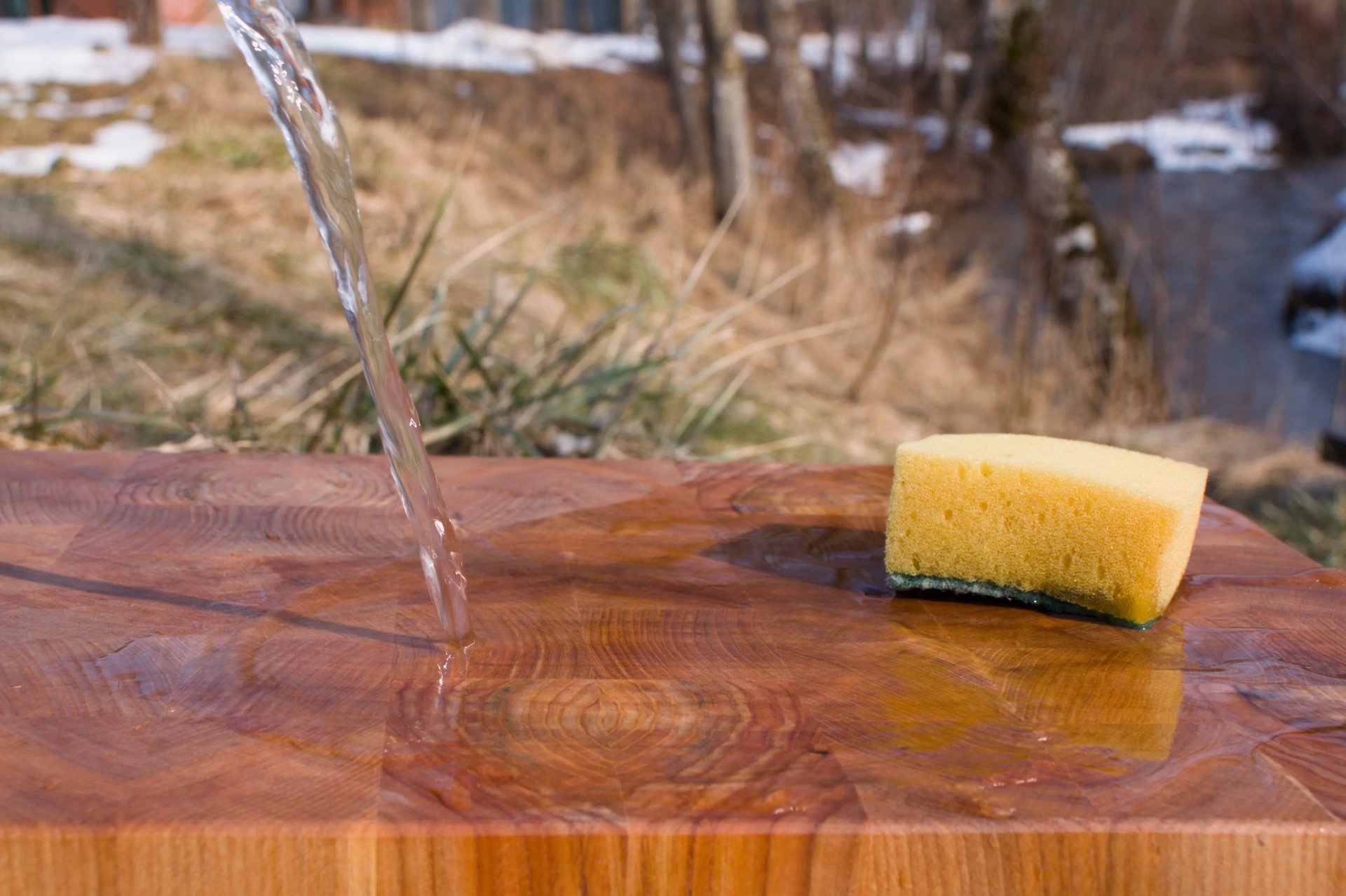
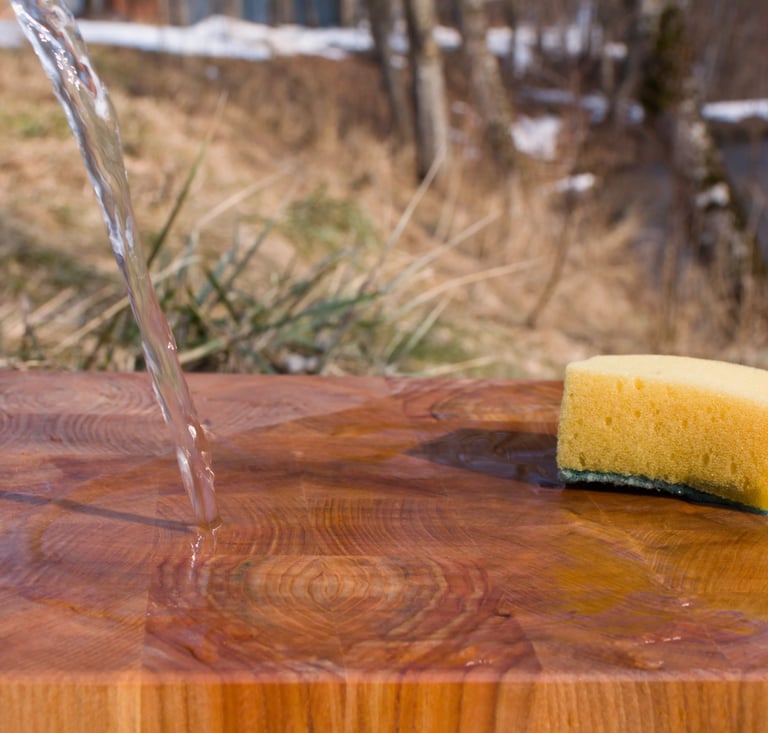
Hand washing only. Never put your board in the dishwasher. Warm water and mild soap are enough - harsh detergents or soaking can damage the wood.
Dry and store properly. Stand your board vertically so air can circulate around both sides. Avoid leaving it flat on wet surfaces or in the sink.
Protect from heat. Don’t place hot pots or pans directly on the board to prevent marks.
Refresh with oil. Periodically apply food-safe oil to nourish the wood surface and maintain its durability.
How to refresh
Over time, your board can start to look a little dry or lighter in color. Regular oiling keeps the wood nourished and protected. For a board used daily, refreshing once a month or every couple of months is usually enough.
Choose the right oil. Use a food-safe oil that won’t go rancid, such as boiled linseed oil.
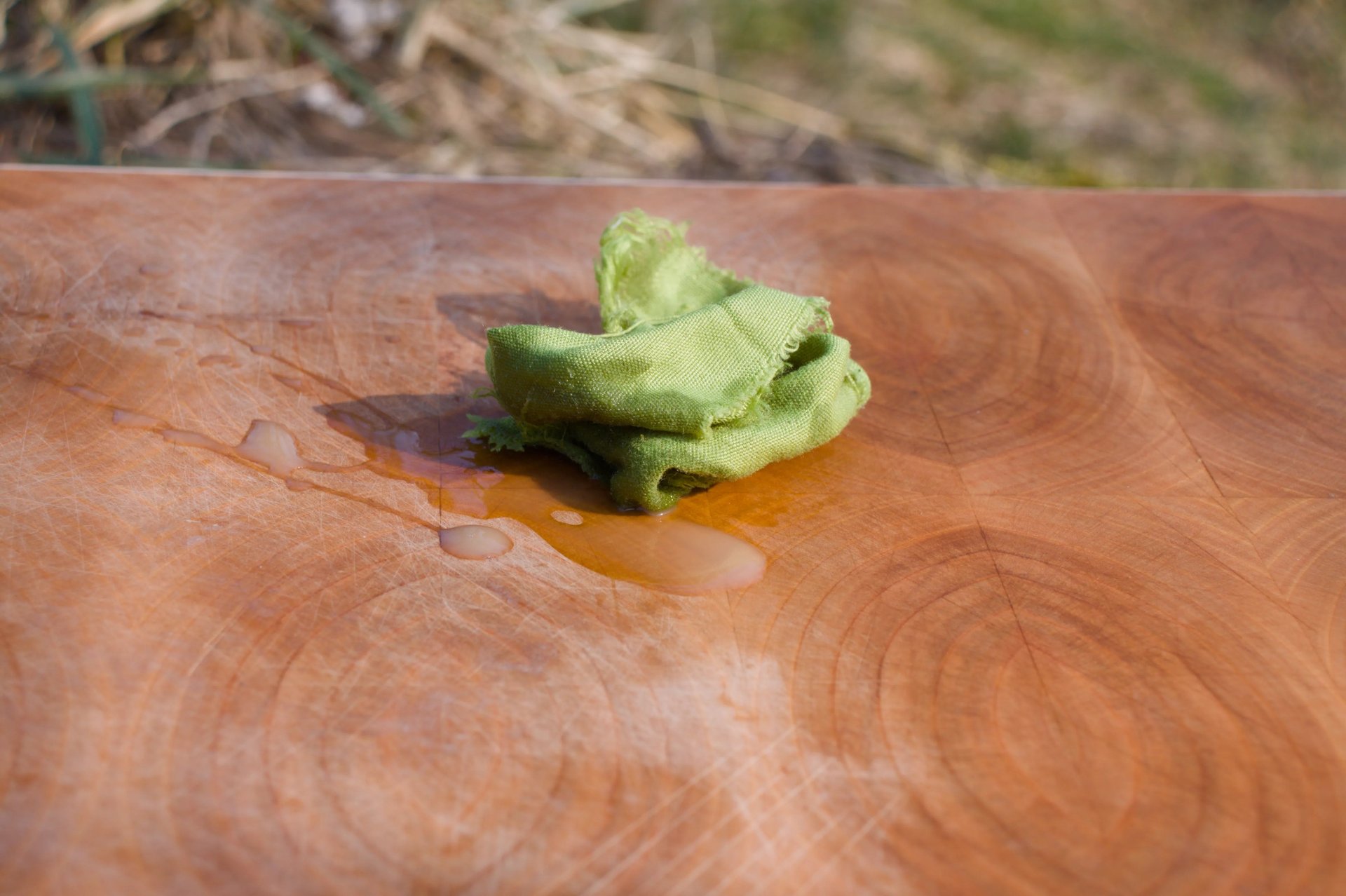
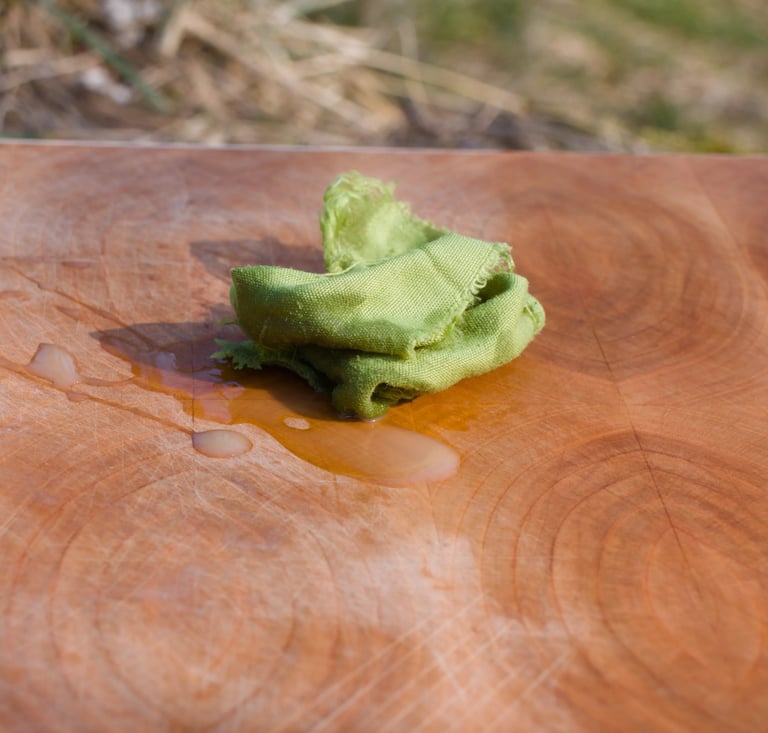
Apply a thin layer. Spread the oil evenly over the surface using a clean cloth or brush.
Wipe off excess. After about 10 minutes, remove any surplus oil so the surface isn’t sticky.
Let it dry. Allow the board to dry for a day. The longer it dries, the better the absorption.
Optional finish. For a silky-smooth, protective surface, you can apply a food-safe wax after the oil has dried.